You Are Not Your Thoughts
Apr 02, 2026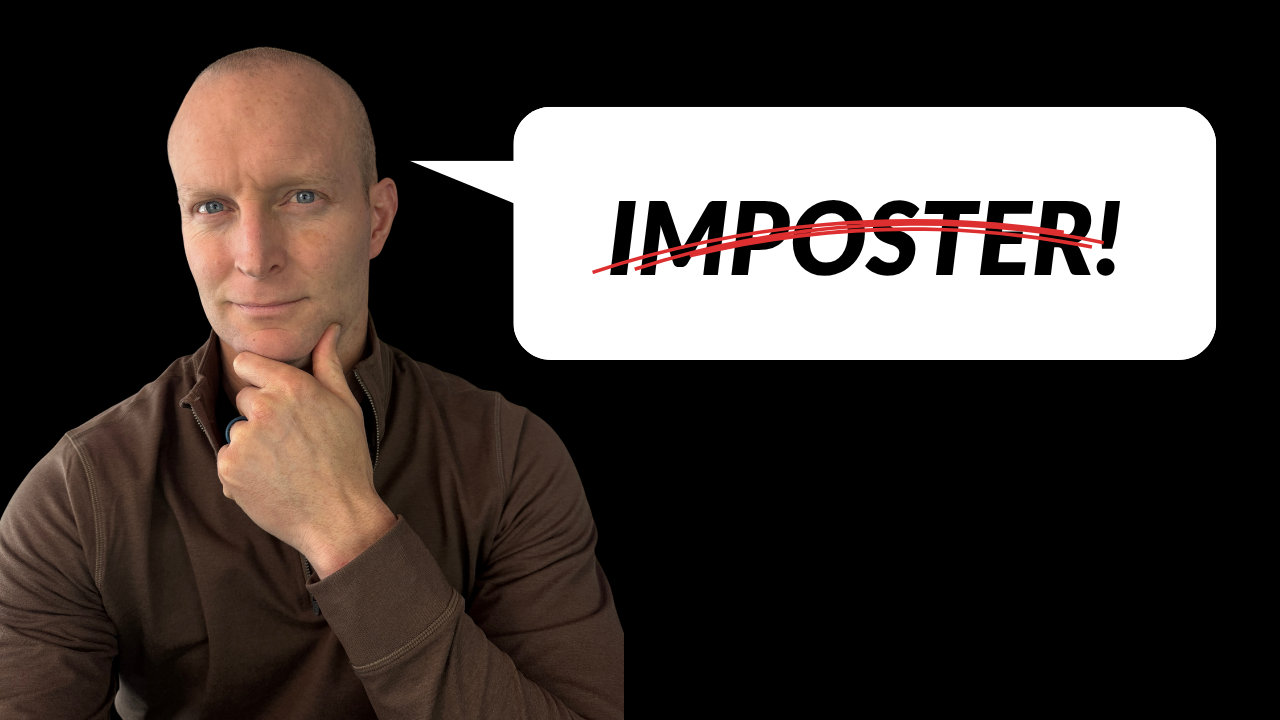
You may have heard the statement, “You become what you think about.”
Earl Nightengale said this. And he is not alone.
Wise teachers of the past have said similar things:
Marcus Aurelius wrote, “The happiness of your life depends upon the quality of your thoughts.”
James Allen wrote, “As a man thinketh in his heart, so he is.”
And the Buddha even said something like, “What you think, you become. What you feel, you attract. What you imagine, you create.”
There is a lot of truth in these statements. Where you focus is where you put your energy. Your energy and effort will dictate your outcomes.
Our thinking has a direct impact on our performance, growth, and quality of life.
But here’s another truth.
You are not your thoughts.
We have thousands of thoughts each day.
Some are helpful, some are destructive, but the vast majority are automatic.
And here’s the problem: We believe our thoughts and feelings are truths.
We tend to act in alignment with our thoughts, so inevitably our thoughts create our identity.
Today, I’m talking about our thoughts, and how they are not the same thing as our identity.
We become what we think about, yes. But we are not our thoughts.
By understanding this topic, we can better understand how our minds work, how our thinking impacts our behavior, and how we can leverage our thinking to perform better.
However, if you believe every thought you have, you will end up avoiding action, doubting yourself, overreacting, and staying stuck in patterns that aren’t helping you.
This is because your thoughts are often not accurate. They are emotional, biased, judgmental, and self-protective.
So, let’s jump in.
You are not Your Thoughts
Let’s just make this clear.
You are not your thoughts. You are the one observing them.
Your thoughts are like bubbles in an idea machine. They just pop into existence, and there is nothing we can do to stop them.
Anyone who has tried meditating will recognize this fact.
Our minds create thoughts. Even when we try to quiet our minds and not think, ideas and thoughts will bubble up.
These thoughts are sometimes aligned with who we are and what we want.
Sometimes they are protective responses and reactions.
Often times they are daydreams.
How often do your daydreams include yourself in some fantasy future or experience?
So, if we are daydreaming, and we are what we think about, then how should this play out?
Maybe you imagine yourself living with more wealth. Does this mean you are more wealthy?
Maybe you imagine getting revenge on that person who hurt you. Does that mean you are violent and vengeful?
Maybe you imagine finally having that conversation you need to have. Does this mean you are courageous?
No.
From these example, we can see that you are not your thoughts.
And yet, there are times when we DO fantasize or indulge in our thoughts and then accept those thoughts as reality.
Have you ever failed at something? If so, have you ever replayed that experience in your mind and then thought, “I’m a failure?”
Have you ever thought of someone’s rejection of you and thought, “I’m unlovable?”
Have you ever felt like an imposter at work?
There are times when we listen to our thoughts and allow them to dictate who we are.
In these scenarios, we do become what we think about.
But friends, let’s expand this picture. You are not your thoughts. You are your actions as a result of your thoughts.
You are your beliefs as a result of the validity you give your thoughts.
You are who you choose to be, whether that is in alignment to, or regardless of, your thoughts.
We will unpack this more in a bit…
Let’s first look at what influences our thoughts.
Where Thoughts Come From
Our thoughts don’t come from nowhere (most of the time).
They come from a substrate of ideas, experiences, beliefs, fears, etc. that lay within our minds.
All thoughts are built from content within our minds. Just like all the meals you can make in your house are dependent upon the food in your fridge and pantry.
There is a saying, “you can only cook with what’s in the kitchen.”
You can only think with the available content in your mind.
For example, think of a city that begins with the letter C.
You may have thought of Cairo. Or Chicago.
But did you think of Cappadocia?
Did you know Cappadocia was a city?
If Cappadocia was not in your mental rolodex, then there is no way for your brain to access that information.
You can only cook with what’s in the kitchen.
Our beliefs, memories, and experiences serve as available ingredients and cookware for our minds to generate thoughts.
Also, our thoughts often come from perceived threats and opportunities. These thoughts pop up in response to feelings of fear, anxiety, excitement, or hope.
Our brains are always scanning our environment for things that can hurt us and things that will help us survive. When we detect one of these things, our brains will respond with an emotion first and then a thought to go along with that emotion.
This actually highlights the difference between an emotion and a feeling.
An emotion is what we do in response to a sensation. A feeling is the label we attach to it.
For example, I have the sensation of uneasiness.
I emote hastiness and my body feels like it needs to move.
I label this with the feeling of anxiety and worry.
From another perspective, I could label this same sensation with the feeling of excitement.
The emotion is the physical response, and the feeling is the label we give it.
Regardless, this process is happening seemingly automatically in the background of our minds.
And thoughts then pop up in the forefront as suggestions (sometimes commands) on what to do.
In our day to day, our thoughts might include things like:
- you should have another slice of cake
- don’t share what you really think
- avoid that person, they are creepy
Our thoughts are most often NOT intentional.
They are reactions to our perceptions, filtered through our beliefs, and influenced by our past experiences.
They are not necessarily “true” in the factual sense.
For example, if you see a stick that looks like a snake, and you react with fear, you are reacting because you perceive a snake. In reality, you are reacting to a stick. But this does not matter. Perception IS reality.
This is where we get caught up. We tend to believe that our feelings and thoughts are reflections of reality. They are not… they are responses to our perception of reality.
Perception is Reality
We believe our feelings are true for good reason.
If we stopped to rationalize every time we felt fear, we would expose ourselves to real risk when we should be fleeing a dangerous scenario.
There is an unintended consequence to this truth-acceptance-bias (I just made that up, but I think it fits).
Our reactionary thoughts can quickly be deemed as “true” and negatively impact our performance.
“I failed” turns into “I’m a failure.”
“This is hard” turns into “I can’t do this.”
“They made a weird face” becomes “That person doesn’t like me.”
Accepting these reactive thoughts as truths does not help us show up as the best version of ourselves.
Our brain works to be efficient and use shortcuts for judgement and analysis.
This is very useful for our survival, but it is not useful for our own growth and performance. And it’s definitely not good for effective leadership.
Again, our thoughts and reactions are based on our perceptions. They are filtered through our beliefs and past experiences. And our default is to accept them as true, even when they don’t serve us.
So, what can we do to intercept these reactions and be intentional with our thinking?
We must create space.
Creating Space for Analysis and Intention
To stop reacting to our thoughts and feelings, we have to hit the pause button and give our rational mind time to make an assessment.
This can be difficult to do in the moment. Especially if you are in an emotional situation. But it can be done with practice and awareness.
The moment you catch yourself in an emotional state and you are thinking about what to do next, pause.
Notice the thought. Ask yourself, “What am I thinking right now? What am I feeling?”
Then label it. Give it a name and then ask, “Is this helpful or unhelpful?”
Right away, these two steps will force our minds to pull out of emotional reactivity and into logical analysis. These are two different thinking systems! We want and need to access our rational minds when we get into a reactive state.
Next, separate from your thought and feeling by telling yourself, “This is a thought, not a fact.”
Then choose your response. What is the action you should take? What is the action that is best aligned with who you want to be?
It’s as Viktor Frankl said regarding the space between stimulus and response. We can use that space to choose how to respond.
The saying “you are what you think about” is true if you act in alignment with your thoughts.
But if you choose to take different actions regardless of what you are thinking, then you are not your thoughts.
The Wrap Up
You are what you pay attention to.
You are the sum of your decisions and actions.
Your thoughts are going to be all over the place. You do not have become your thoughts… at least not all of them.
The next time you catch yourself in a behavior pattern that is not helping you, ask yourself what thoughts and feelings are behind it.
Then walk through those 4 statements:
- What am I thinking and feeling?
- Is this helpful?
- Acknowledge it is a reaction, and not “truth”
- Choose your aligned response
Our minds are powerful things, friends.
When we control our thinking we can become unstoppable.
Uncontrolled thinking is reactive and protective… and it keeps us from pushing through risk and into new territory.
Thanks for being here.
I’m rooting for you to crush it.
Clark